Practical info
Practical info
Weather, transport, Teide permits, local food and customs.
Emergency numbers
112 · One number for ambulance, fire and police — operators speak English.
Weather by month
October
26.8°/ 25° North
- Sea
- 23.8 °C
- Sunshine
- 6.9 h/day
- Rain · South
- 1.6 days
- Rain · North
- 3 days
- Teide max/min
- 14.3° / 6.9°
- Snow on Teide
- 0.2 days
Teide
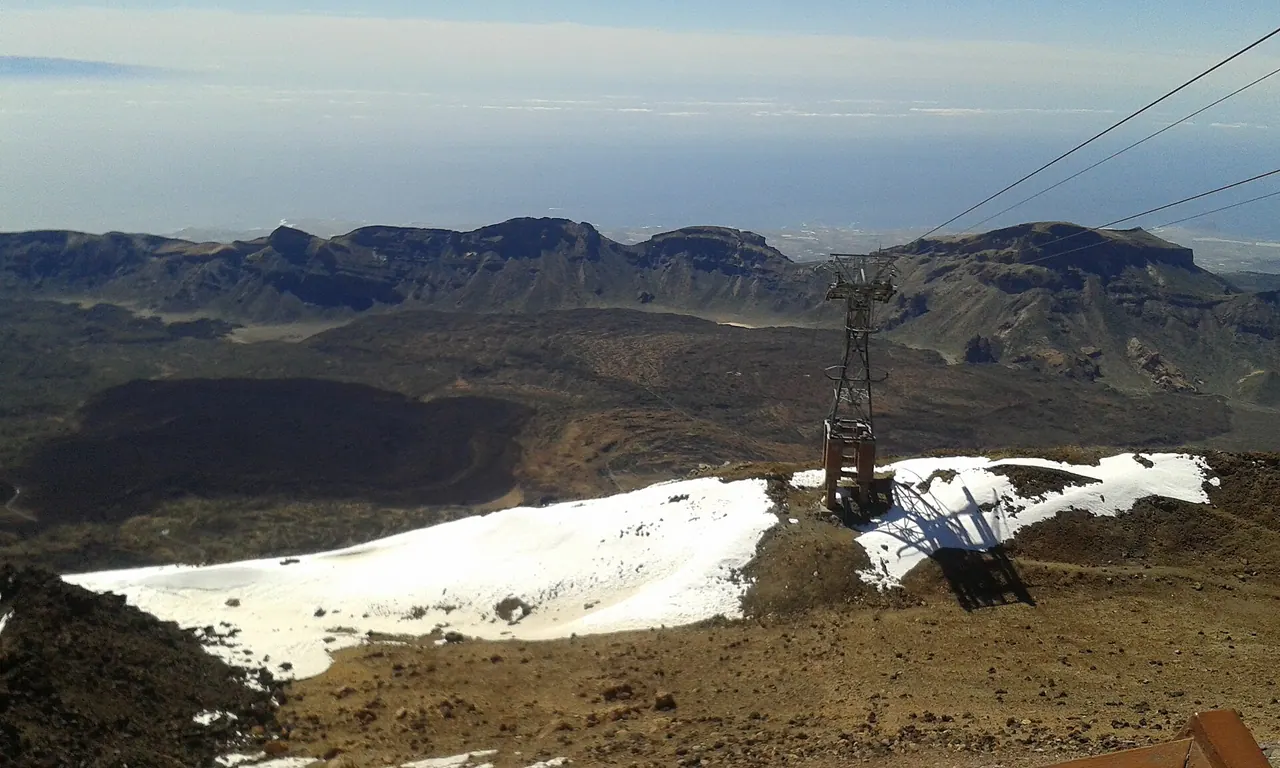
- The summit of Teide (3,718 m) and the upper cable car station (3,555 m) are roughly 8–9 °C colder than Izaña. In winter it hovers around freezing during the day and drops to −5 to −10 °C at night, with wind chill making it feel colder still. Even in summer it's only around 0–5 °C on the summit at sunrise.
- Snow on Teide falls mainly December – March, occasionally in November or April. When there's snow and ice, the TF-21/TF-24/TF-38 roads close and the cable car stops running. Snow equipment then becomes compulsory on the hiking trails (see section 3).
- Wind closes the cable car fairly often, especially in winter. Check its status at volcanoteide.com before you set off.
Calima, wind and the “sea of clouds”
- Calima is dust from the Sahara carried in on easterly winds. It's most common in winter (December – March), but can also arrive in summer along with a heatwave. The sky turns a yellowish brown, visibility drops and air quality deteriorates. People with asthma and young children should limit their time outdoors. Calima usually lasts 1–3 days. Flights are disrupted only in exceptional cases.
- The trade wind blows from the north-east and is strongest in summer. The windiest stretch is the south-east coast (the airport, El Médano – a windsurfers' paradise). Costa Adeje and Callao Salvaje are sheltered from it.
- Mar de nubes (sea of clouds): the trade wind pushes moist air up against the northern slopes. Between 600 and 1,500 m a continuous layer of cloud forms, most often from May to September. That's why the north (Puerto de la Cruz, La Laguna, Anaga) is often overcast while the south and Teide bask in sunshine above the clouds. From the roads up to Teide (the TF-21 above Vilaflor, the TF-24 from La Esperanza) you get a beautiful view of the sea of clouds below you.
- Rule of thumb: when it's cloudy in the north, head south or up to Teide. When it's windy and cloudy in the south too, pick something from the “When it's cloudy / windy” itinerary.
Transport
From Tenerife South Airport (TFS) to Costa Adeje and Callao Salvaje
⚠ Beware of outdated advice: route 450 now runs Costa Adeje – Los Cristianos – San Isidro, and TITSA doesn't list it among its airport routes. Route 111 (Santa Cruz – Costa Adeje, every 30 min) only stops at the airport turn-off (“Cruce Aeropuerto”), not outside the terminal.
| Option | Price (2026) | Time | Notes |
|---|---|---|---|
| Taxi (rank outside the arrivals hall) | metered, roughly €30–45 to Costa Adeje, €40–55 to Callao Salvaje | 20–25 min / 30 min | We haven't been able to confirm the official fares. An airport supplement applies, and a higher tariff applies at night and on public holidays. Expect a queue in high season. |
| Uber (app) | fixed price in the app | same as a taxi | Operating since June 2023 in Adeje, Arona, Guía de Isora and Granadilla, including TFS airport. Rides are provided by licensed taxi drivers and Uber Black. |
| Pre-booked transfer | saloon approx. €40–55, minivan €50–75 | 25 min | Fixed price, driver waiting with a name sign. Handy for late arrivals or if you're travelling with children (child seats). |
| TITSA bus – route 40 “Aeroexpress” | €3.70 / person | ~40 min | TFS Airport ↔ Estación Costa Adeje, every 30 min, roughly 7:00–21:40 (first bus from Costa Adeje at 5:30). Stops at Los Cristianos, El Camisón, Columbus, Llanos de Troya and Magma (near Ponderosa, where there's also free parking). Heading towards Costa Adeje, it only drops passengers off at the intermediate stops. |
| Route 711 (night bus) | by distance | – | Santa Cruz – TFS Airport – Los Cristianos – Costa Adeje, when route 40 isn't running. |
| Route 343 | €9.55 with a ten+ card (€13.55 without, according to Teneriffa News) | 100 min | Puerto de la Cruz – TFN Airport – TFS Airport – Costa Adeje, only 4 services a day. |
| To Callao Salvaje by bus | €3.70 + ~€2 | ~1 h 15 min | Route 40 to Estación Costa Adeje, then route 473 (Los Cristianos – Costa Adeje – Callao Salvaje – Los Gigantes, roughly every 30 min during the day). |
TITSA – buses (“guaguas”)
- Paying: the easiest way is with a contactless bank card, directly to the driver. Alternatively, use a ten+ card (costs €2, topped up at kiosks, bus stations and machines at the airport) or the ten+ móvil app. Paying with a ten+ card (Monedero) makes each journey cheaper than a single ticket.
- Tourist passes (2026): 1 day for €10, 7 days for €50, with unlimited travel on all buses and the tram. Load them onto a ten+ card or buy them in the ten+ móvil app. Validity starts from first use.
- Free or discounted travel is for residents only. The monthly “Bono residente canario” for €19, free travel for children aged 5–9 and senior passes are only available to people officially resident in the Canaries. Tourists can't get them.
- Key routes for guests at Ponderosa: 473 and 477 (to Los Gigantes, Playa San Juan and Callao Salvaje), 447 (Los Cristianos – Costa Adeje – Adeje), 342 (Costa Adeje – Teide: departs 9:25 from Estación Costa Adeje, 9:40 from Los Cristianos, returns from the cable car at 15:40, only 1 service a day), 343 (north).
- Timetables and journey planner: titsa.com or the “Titsa” app. Find the stops near your accommodation in Google Maps (public transport tab).
Car hire
- Local firms (Cicar, AutoReisen, PlusCar and others) usually include insurance with no excess in the price. On its official website, Cicar lists the following as free: comprehensive insurance with no excess, unlimited kilometres, a second driver, child seats and booster seats, and returning the car at the airport. No deposit blocked on your card – that's how customers and comparison sites describe it, but Cicar's website doesn't say so explicitly. Check when you book.
- Budget international firms booked through comparison sites often block €300–1,200 on your credit card and only sell extra insurance at the desk. Read the terms carefully (fuel policy “full-full” vs. “same-same”, debit cards, driver age 21+/23+).
- Taking a hire car on the ferry to La Gomera is often prohibited or requires written permission from the rental company.
- From 1 January 2026, cars with Spanish number plates (including hire cars) must carry a V-16 warning beacon instead of warning triangles. When you collect the car, check that it's in the glovebox.
Driving tips
- Roundabouts: when entering, give way to cars already on the roundabout. The inner lane is for going round, and you may only exit from the outer (right-hand) lane. Move over to the right in good time before your exit. Exiting from the inner lane will get you fined, and in an accident you'll be held at fault.
- Speed limits: 100–120 km/h on the TF-1/TF-5 motorways, depending on the section. In built-up areas, since 2021 the limit is 50 km/h only on roads with 2+ lanes in each direction, 30 km/h on roads with a single lane in each direction and 20 km/h on streets without a pavement. A new fixed speed camera has been in place since 2026 on the TF-1 at km 76.9 (past Costa Adeje). Mobile speed checks are common.
- Mountain roads (Masca TF-436, Anaga TF-12, Teide TF-21/TF-24/TF-38, Teno): narrow hairpin bends, cyclists, animals, fallen rocks. Sound your horn on blind bends, drive slowly in fog and only stop in lay-bys. Buses longer than 10 m are banned from the road into Masca. On winter mornings there's a risk of ice on Teide.
- Fuel (official MITECO prices, 11 October 2026, Tenerife): 95 petrol median €1.58/l (range 1.29–1.71), diesel median €1.72/l (1.58–1.83). In Adeje and Arona petrol works out at about €1.44–1.68/l. In the Canaries, diesel is more expensive than petrol. There's no petrol station in Teide National Park, so fill up beforehand (Vilaflor, La Orotava, Adeje).
- There are no toll roads on Tenerife. The worst traffic jams: the TF-5 around La Laguna and Santa Cruz (7:00–9:00 and 17:00–19:00) and the TF-1 around Adeje and Los Cristianos at rush hour.
Parking
- Line colours: white = free · blue = pay-and-display zone (zona azul, time-limited; ticket from the machine or via the app shown on the machine, displayed on the dashboard) · yellow = no parking · green = residents only.
- Near Ponderosa: free parking at Magma Arte & Congresos (owner's tip).
- Puerto de la Cruz and La Laguna: the centres are blue zones or pedestrianised. Paid car parks on the edge of the centre are the most convenient option.
- Santa Cruz: many streets are still free, but the city has announced new paid zones for 2026–2028. Use the underground car parks (e.g. near Plaza de España).
- Teide: parking is currently free and needs no booking. However, at Roques de García and the cable car it's full roughly from 10:00 to 14:00, so arrive before 9:00 or in the afternoon. The Cabildo has announced access controls and a quota of 500 bookable parking spaces for the end of 2026, plus shuttle buses from 2027 (about €7 for visitors). As of October 2026, none of this is in force yet (check before the 2027 season).
- Masca: hikers doing the trek must leave their car in Santiago del Teide (car park by the cemetery) and continue on bus 355. Punta de Teno: no access by car (see section 3).
- Don't leave valuables in the car. Break-ins at hire cars parked at viewpoints and trailheads (Masca, Teide, Anaga, Los Gigantes) are common. Leave the boot empty and the glovebox open.
Ride-hailing apps
- Uber: has operated in the south (Adeje, Arona, Guía de Isora, Granadilla, including TFS airport) since June 2023. Rides are provided by licensed taxi drivers and Uber Black, and you see the fixed price upfront. From the south you can travel anywhere on the island.
- As of January 2026, Bolt and Cabify do not operate on Tenerife. The Canary Islands had no VTC (private-hire) licences for these platforms, and their number is capped by law at 1 VTC per 30 taxis.
- You can hail a regular taxi in the street (green light = available) or pick one up at a taxi rank.
Sources: titsa.com · titsa.com · titsa.com · titsa.com · titsa.com · teneriffa-news.com
Permits and reservations (2026)
Teide summit – PNT 10 Telesforo Bravo trail (La Rambleta → crater, 3,718 m)
- A permit is compulsory and is issued only through Tenerife ON: tenerifeon.es. You need to register first. Bookings made on other websites are not valid.
- Since 19 January 2026 there's a fee (eco-tax) for the 9:00–17:00 time slots: €15 for visitors from outside the Canaries, €6 for residents of the other Canary Islands. Tenerife residents and children under 14 go free.
- New slots are released every Monday at 7:00 (Canary Islands time), always 56 days ahead. They sell out immediately. One booking per person every 15 days.
- Bookings can't be changed or cancelled, and there are no refunds. The only exceptions are if the trail closes due to weather or the cable car is out of service. At the checkpoint, you show your booking and your passport or ID card.
- Compulsory equipment (Tenerife ON rules updated in October 2026): a fleece or warm layer even in summer, and sturdy trekking shoes or high-ankle hiking boots. In snow and ice you also need crampons (10–12 points) and an ice axe, plus a signed declaration (experienced mountaineer, accident insurance). Without the right gear, the rangers won't let you through and won't refund you.
- The permit doesn't include a cable car ticket, and a cable car ticket doesn't include the permit. If the cable car isn't running, the permit is still only valid for its own time slot.
- PNT 07 Montaña Blanca – La Rambleta (hiking up from below): during the fee-paying time slots (9:00–15:00, according to RTVC), non-residents pay €6 on weekdays and €10 at weekends and on public holidays. This is also booked through Tenerife ON.
Teleférico del Teide cable car
- 2026 prices (return ticket): non-resident adult €42, child aged 3–13 €21. One-way ticket €23.50 / €11.75, with audio guide €45.50, with a guided walk to the Pico Viejo viewpoint €54.50. Canary Islands residents pay €10.50.
- Opening hours in October and November 2026: 1–13 October, 9:00–18:00 (last ride up 17:00) · 14–24 October, 9:00–17:30 (16:30) · 25 October to 31 December, 9:00–17:00 (16:00). In summer until 18:40.
- Buy online with a time slot: volcanoteide.com. The cable car doesn't run in strong winds or icy conditions. Check its status on the website in the morning.
- Upper station (3,555 m): without a permit you can only walk to the two viewpoints (La Fortaleza, Pico Viejo).
Other changes in Teide National Park
- The Cabildo has taken over management of the park and announced: controls at viewpoints (Roques de García, Chipeque, Minas de San José), access controls and bookable parking (end of 2026), €7 shuttle buses (from 2027) and an eco-tax for hire cars (amount still under discussion). As of 11 October 2026 we have no confirmation that any of this is in force yet. Check on tenerifeon.es before the 2027 season.
- Some trails are still closed following the 2023 wildfire and Storm Therese (March 2026). Current closures: tenerifeon.es
Barranco de Masca (Teno)
- Booking is compulsory, from €40.66 (entry, helmet, insurance, equipment check). Tenerife residents go free. Bookings: caminobarrancodemasca.com
- Since December 2025, TITSA bus no. 355 is compulsory from Santiago del Teide (approx. 20 min). You are not allowed to drive to the start of the trek. Leave your car in the car park by the cemetery in Santiago del Teide and be at stop no. 4692 at least 1 h before your booked time. At the checkpoint by the Masca visitor centre you'll also need to show your bus ticket.
- The route is one-way, downhill only (~5 km, ~4 h, high difficulty). The return trip is by boat only, to Los Gigantes. The boat ticket is sold separately and you must have it before you start. Routes 462 and 325 run from Los Gigantes to Santiago del Teide.
- Closed hiking boots with grippy (Vibram-type) soles are compulsory – you won't be let in wearing trainers or sandals – as are 1.5 l of water per person and a passport or ID card. Masca beach is closed to the public, and both swimming in the rock pools and flying drones are prohibited.
- The trail often closes due to weather and sea conditions. As of 11 October 2026, the official website listed it as closed. Current status: caminobarrancodemasca.com
- You can visit the village of Masca itself without doing the trek. The TF-436 is open but very narrow and parking is minimal, so come early in the morning.
Barranco del Infierno (Adeje)
- Booking is compulsory: barrancodelinfierno.es · €16 non-resident adult, €6 Canary Islands resident; prices for children aged 5–12 are shown in the booking system. Children under 5 are not allowed.
- Entry: in winter (16 September–31 May) from 8:30 to 11:30, with the park closing at 14:30. In summer (1 June–15 September) from 8:00 to 10:30, closing at 13:30. Arrive 15 minutes before your time slot.
- The return route is 6.5 km (~3 h) with +250 m of ascent. A helmet is compulsory and provided on site; sturdy footwear is also compulsory. Dogs are not allowed. The trail closes in rain and when there's a risk of rockfall – the current status is on the homepage.
Punta de Teno (lighthouse on the western tip)
- The TF-445 is closed to private cars (restrictions have been in place since April 2025 for repair works and, according to 2026 guides, still apply). You can get there on TITSA route 369 from the bus station in Buenavista del Norte (approx. 20 min, €1), or by taxi. Check the current restrictions on titsa.com or with Buenavista town hall (to be confirmed).
Anaga
- No general permit is needed. The El Pijaral trail (Reserva Natural Integral) requires a free permit with a daily limit, available through Tenerife ON / the Cabildo: tenerifeon.es. Entering without a permit can get you fined.
- In 2026 the municipalities of Santa Cruz and La Laguna proposed restricting access for hire cars to Anaga (cameras, quotas). For now it's only a proposal. The TF-12 is narrow – drive very carefully in fog.
Cueva del Viento (Icod de los Vinos)
- Visits, with a helmet and head torch, are guided only and by reservation: cuevadelviento.net · adults €25, children aged 5–12 €8.50 (residents €15 / €5). Children under 5 are not allowed. Closed-toe shoes are compulsory; it's 14 °C inside.
Sources: tenerifeon.es · tenerifeon.es · rtvc.es · volcanoteide.com · caminobarrancodemasca.com · barrancodelinfierno.es
Local customs and tips
- Siesta and opening hours: in towns and villages, small shops often close roughly 13:30–16:30. In the tourist areas (Costa Adeje, Los Cristianos, Las Américas) and in shopping centres, they're open all day, Sundays included. Mercadona is closed on Sundays. Hiperdino, Spar and smaller grocery shops in the tourist areas are usually open on Sundays too. On New Year's Day, 6 January, Good Friday and 25 December, almost everything is closed.
- Lunch and dinner: locals have lunch at 13:30–15:30 and dinner from 20:30. In the tourist areas, many kitchens stay open all day.
- Tipping: isn't compulsory. For good service, leave 5–10% or round up the bill. In a bar, leaving your small change is enough.
- IGIC 7%: instead of VAT, the Canaries have their own tax, IGIC, with a standard rate of 7%. Menu prices usually include it (look for “IGIC incluido”). Electronics and alcohol aren't dramatically cheaper than elsewhere in Europe, but tobacco is.
- Tap water: is mostly desalinated and chlorinated. It's safe from a hygiene point of view, but tastes flat or of chlorine, and most locals don't drink it. Buy bottled water (5–8 l containers at the supermarket).
- Sun and UV: the island lies at 28° north. The UV index is typically around 5–7 even in winter and 10–11 in summer, so you can burn even in January. Use SPF 50, wear a hat and spend the middle of the day in the shade (12:00–16:00). On Teide the UV is even stronger and the air drier.
- Ocean safety:
- Flags: green = swimming without restrictions, yellow = take care, red = no swimming (this is enforced, and you can be fined). On beaches without a lifeguard, you swim at your own risk.
- Rip currents: if a current is pulling you away from the shore, don't swim against it. Swim parallel to the shore, then make your way back to the beach.
- El Duque and Fañabé get a powerful shore break when the surf is up, which can knock you off your feet, as well as rip currents. Playa de La Arena (Puerto de Santiago) is known for big waves and strong currents and isn't suitable for young children. Beaches protected by breakwaters are calmer (La Pinta, Puerto Colón, El Bobo, and Torviscas when the waves are small).
- Never turn your back on the ocean on rocks and piers. The Atlantic sends in sudden sets of bigger waves that sweep people off the rocks every year.
- Natural pools (charcos) such as Garachico, Alcalá, Bajamar and Punta del Hidalgo are gorgeous when the sea is calm, but deadly dangerous in heavy swell. If waves are washing over the edge of the pool or a red flag is flying, stay out of the water and off the edges.
- Los Gigantes: the cliffs are hundreds of metres high and rocks fall from them. That's why Los Guíos beach beneath the cliffs is repeatedly closed. Respect the tape and the signs, and don't sit directly below the rock face.
- Car: don't leave anything on view in the car (see Transport).
- Pharmacy (farmacia): look for the green cross. The duty pharmacies (farmacia de guardia) are posted on the door of every pharmacy and on the official website: coftenerife.es
- Health: 112 is the single emergency number (ambulance, police, fire brigade, mountain and sea rescue), and you can speak English. The public hospital for the south is Hospital Universitario del Sur (El Mojón, Arona). With a European Health Insurance Card (EHIC, or the UK GHIC) you'll be treated at public facilities (Servicio Canario de Salud). Private clinics (e.g. Hospiten, Quirón) may not accept the EHIC, so make sure you have travel insurance.
What to wear and what to pack
- All year round: swimwear, light summer clothes, a thin hoodie or jacket for the evenings, SPF 50 sun cream, sunglasses, a hat, a water bottle and sturdy sandals.
- November – March: short sleeves during the day (21–23 °C), long trousers and a hoodie in the evening. Expect rain in the north and in the mountains, so pack a light waterproof jacket.
- April – June: much the same as winter, only the evenings are warmer. The north is often overcast in May and June (“June gloom”).
- July – October: hot (27–29 °C), so go for light natural fabrics and a sun hat for the kids. During calima, a scarf or face mask helps.
- For a trip up Teide (even in summer): a warm layer + windproof jacket + long trousers + hat and gloves from November to April. At the upper cable car station it's typically 15–20 °C colder than by the sea. For the climb to the summit, a fleece and sturdy trekking shoes are compulsory (otherwise you won't be let through).
- Hiking (Masca, Anaga, Barranco del Infierno): sturdy footwear with grippy (Vibram-type) soles (compulsory in Masca), 1.5–2 l of water, a head torch and a charged phone.
- Water shoes: we recommend them for stony and lava beaches and for natural pools (Alcalá, Garachico, Playa Ajabo near Callao Salvaje, El Puertito), where there are sharp rocks and sea urchins.
- Snorkel and mask: there's plenty to see underwater (La Caleta, El Puertito, Abades). A basic set is all you need.
- Documents: for EU citizens a national ID card is enough (UK visitors need a passport). Also bring your EHIC (UK: GHIC), travel insurance, driving licence and a credit card in the driver's name (for car hire), plus paper or digital copies of your bookings (Teide, Masca, Barranco del Infierno).
- Electricity: 230 V, type F sockets (the standard continental European two-pin plug), so UK and Irish visitors will need an adapter.
What to order — food glossary
Tap a card ↻
Useful phrases
Hola, buenos días / buenas tardes.
Hello, good morning / good afternoon.
Por favor / Gracias.
Please / Thank you.
¿Habla inglés?
Do you speak English?
Una mesa para cuatro, por favor.
A table for four, please.
¿Tienen menú del día?
Do you have a set lunch menu?
La cuenta, por favor.
The bill, please.
Agua sin gas / con gas.
Still / sparkling water.
Soy alérgico/alérgica a… / sin gluten.
I'm allergic to… / gluten-free.
¿Cuánto cuesta?
How much is it?
¿Dónde está la parada de guagua?
Where's the bus stop? (in the Canaries, a bus is called a “guagua”)
¿Se puede aparcar aquí?
Can I park here?
¡Ayuda! Llame a una ambulancia.
Help! Call an ambulance.
Stay in the heart of it
The whole island within reach
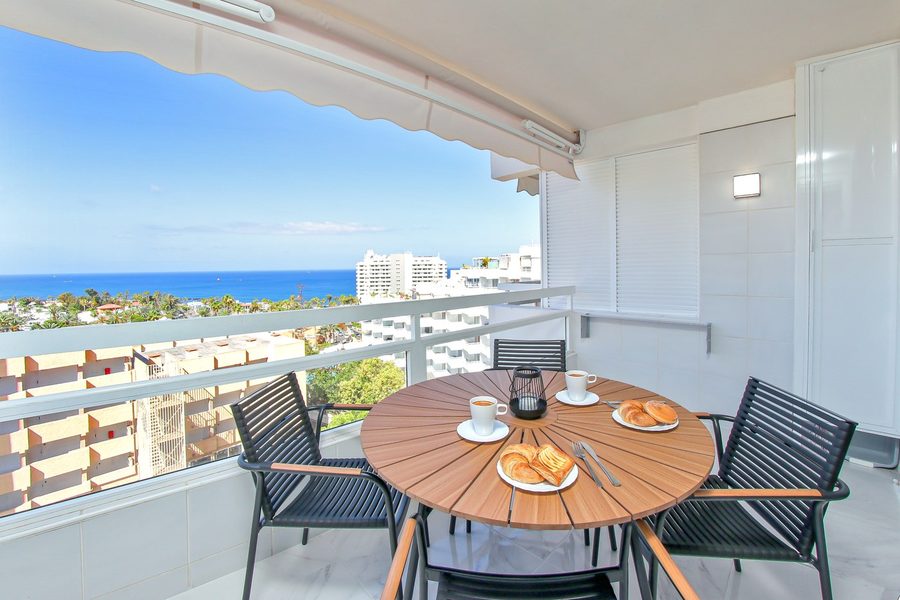
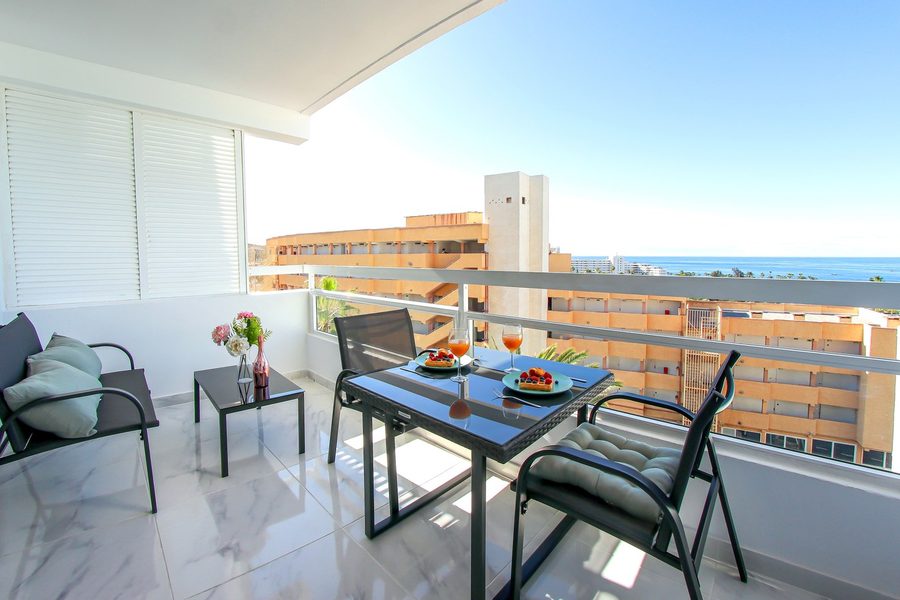
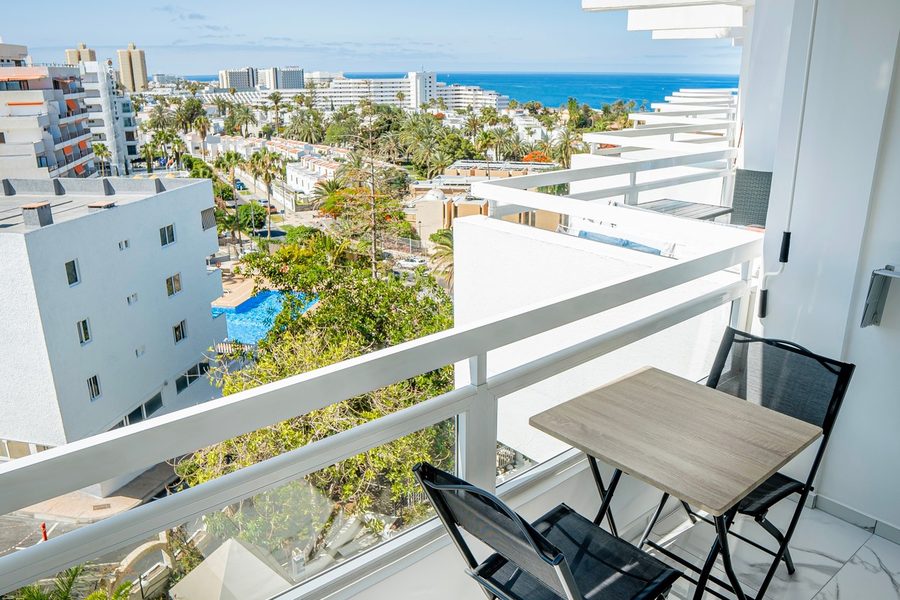
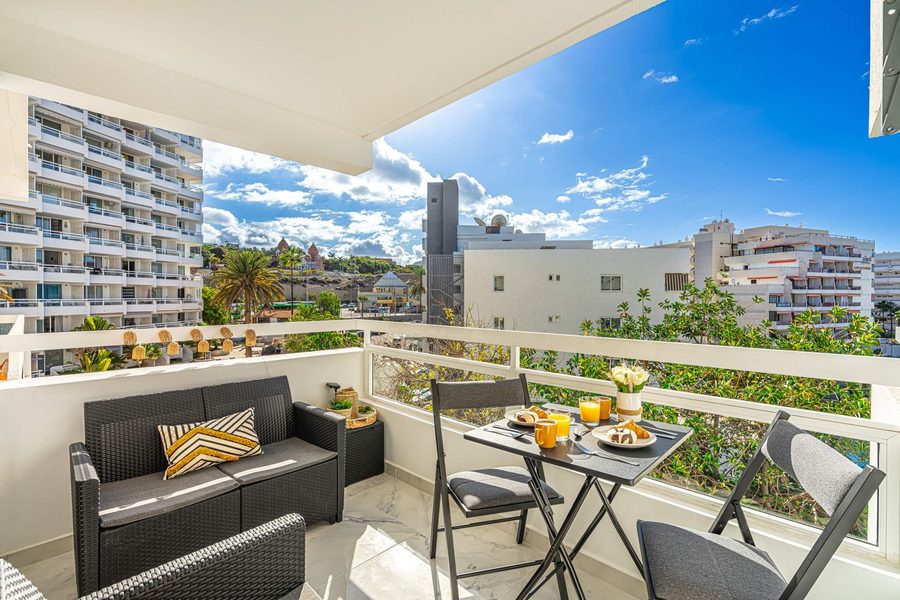
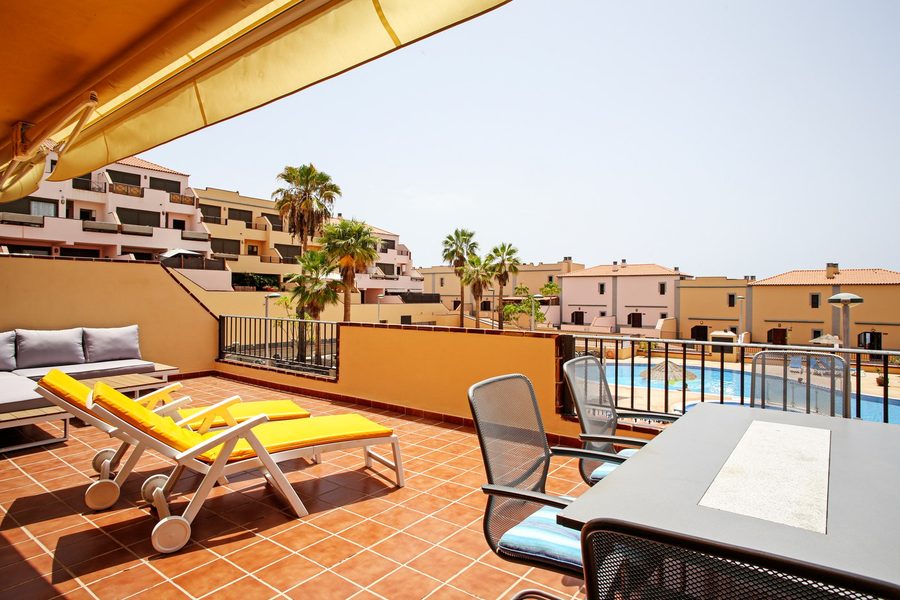
Our Ponderosa apartments are 350 m from El Bobo beach, and Sun Rays Bay house is 100 m from Ajabo beach. Book direct — no portal fees.
- Book direct — no Booking/Airbnb fees
- Guest rating 4.7–4.9 ★ on Airbnb
- Pools, free parking and on-site help
- 7-seat car with bike rack for rent